Introduction
In a stunning scientific breakthrough, researchers have discovered that certain rocks on the ocean floor can generate oxygen without the presence of sunlight. This finding not only shatters our previous understanding of oxygen production in marine environments but also opens up new possibilities for sustaining life in extreme conditions, both on Earth and potentially on other planets.
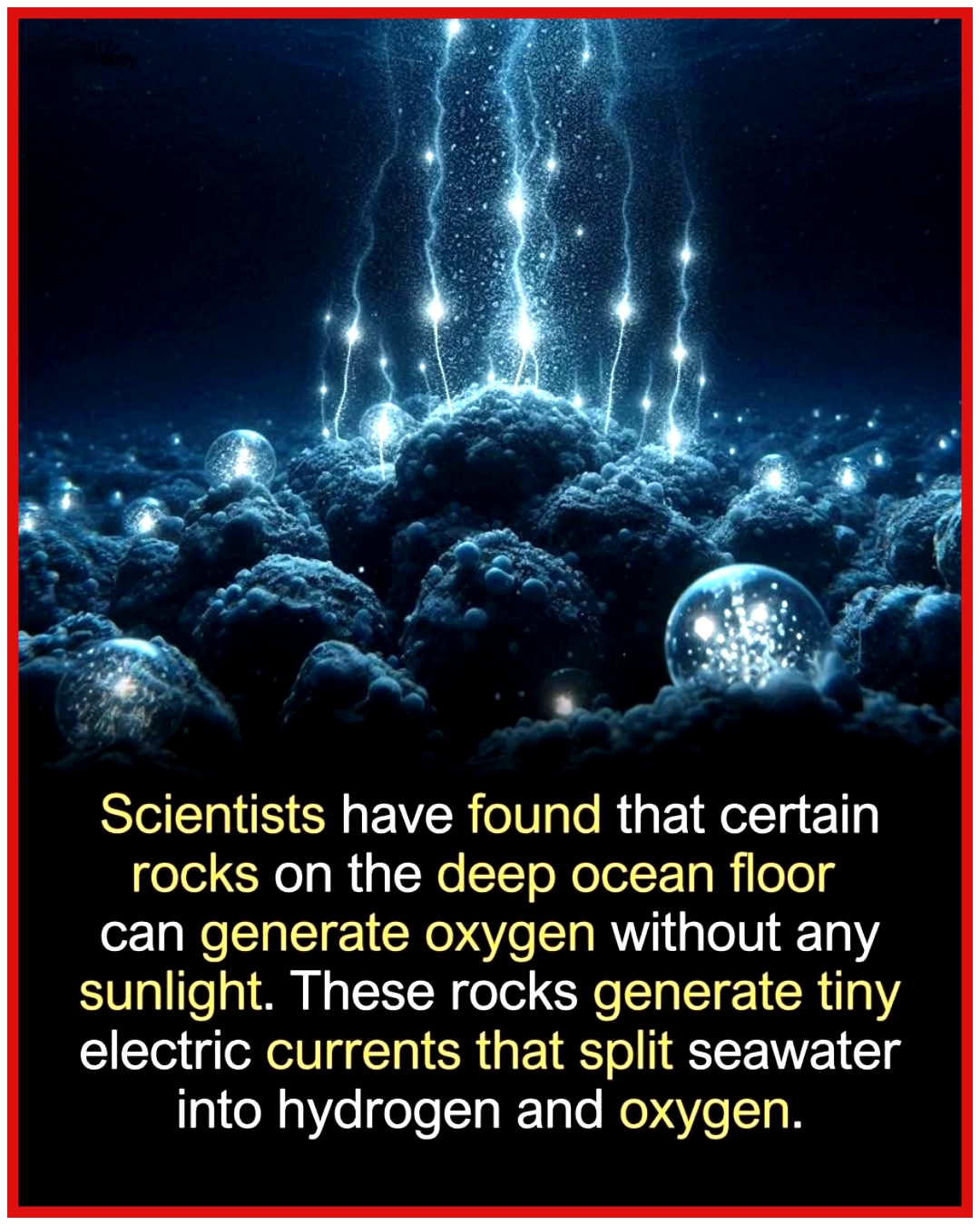
This process, known as “dark oxygen” production, involves polymetallic nodules located in the deep seabed, particularly in regions like the Clarion-Clipperton Zone in the Pacific Ocean. These nodules are capable of producing minute electrical currents that initiate a chemical reaction, splitting water molecules into hydrogen and oxygen. This unexpected source of oxygen could significantly alter our understanding of life in the abyssal zones of the ocean.

What Are Polymetallic Nodules?
Polymetallic nodules, also known as manganese nodules, are potato-sized lumps of minerals that form over millions of years on the ocean floor. Rich in valuable metals like manganese, nickel, copper, and cobalt, these nodules have long been studied for their economic potential. However, this new discovery reveals a previously unknown function: their ability to facilitate electrochemical reactions that result in oxygen production.
The Process of Dark Oxygen Production
Unlike the traditional understanding that oxygen in the deep sea originates from surface-level photosynthesis or transported oxygen from upper layers, this new process is entirely independent of sunlight. When seawater comes into contact with these nodules, tiny electric currents—naturally generated by the nodules’ metallic content—cause an electrochemical reaction that splits water molecules (H2O) into hydrogen (H2) and oxygen (O2).
The implications of this are profound. Not only does it suggest a new method of sustaining life in the ocean’s deepest parts, but it also forces scientists to rethink the very foundations of oceanic and possibly extraterrestrial life.
Implications for Deep-Sea Life
The deep sea