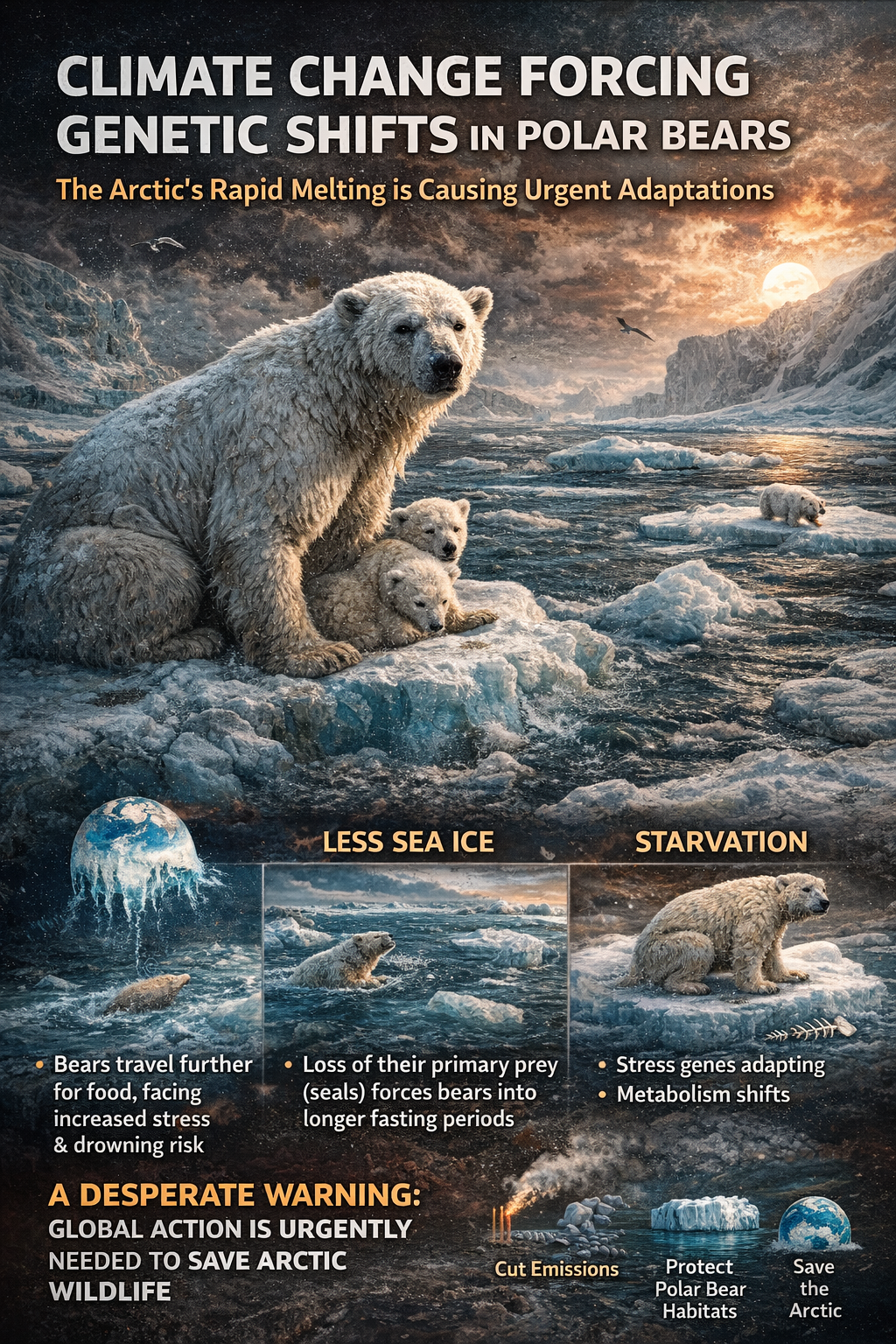
The Arctic on the Brink: A Rapidly Changing Ecosystem
The Arctic is warming at a rate significantly faster than the rest of the planet. This phenomenon, known as Arctic amplification, is primarily driven by the loss of sea ice. Sea ice acts like a massive white reflector, bouncing sunlight back into space. As it melts, darker ocean water is exposed, absorbing more solar radiation and further accelerating warming – a vicious feedback loop.
For polar bears, sea ice is not merely a platform; it is their hunting ground, their migratory path, and their breeding habitat. They are apex predators, exquisitely adapted to a life intertwined with ice. Their scientific name, Ursus maritimus, literally means “maritime bear,” a testament to their deep connection to the marine environment and its frozen surface.
Genetic Shifts: A Whisper from the Bears’ DNA
Recent research, utilizing advanced genomic sequencing techniques, has begun to uncover subtle yet significant genetic shifts within polar bear populations. These changes are not random; they appear to be responses to the intense selective pressures brought about by their rapidly altering environment.
One key area of investigation is genes associated with metabolism and energy regulation. Polar bears are renowned for their ability to accumulate vast fat reserves, crucial for surviving long periods between successful hunts and for insulating them against extreme cold. As sea ice diminishes, so do their hunting opportunities, particularly for their primary prey, ringed and bearded seals. This leads to longer periods of fasting and increased energy expenditure as they travel greater distances to find food or suitable ice.
Scientists are observing potential shifts in genes that could influence:
- Fat Metabolism: Changes that might allow some bears to be more efficient at utilizing existing fat stores or adapting to a more varied, though less ideal, diet.
- Energy Expenditure: Genetic variations that could contribute to lower metabolic rates during periods of food scarcity, essentially making some bears “hardier” in lean times.
- Stress Response: Genes related to physiological stress responses could also be under selection, as bears grapple with unprecedented levels of environmental perturbation.
Another area of interest is genes related to immune function. Increased stress and altered diets can compromise immune systems, making individuals more susceptible to disease. Genetic adaptation in this area could represent a crucial survival mechanism.
It’s important to understand that these genetic changes are not occurring overnight in a dramatic fashion. Evolution is a gradual process, driven by natural selection acting on existing genetic variation within a population. Individuals with traits better suited to the new conditions are more likely to survive and reproduce, passing on those advantageous genes. The fact that scientists are detecting these shifts within what is, evolutionarily speaking, a relatively short timeframe, underscores the extreme pressure polar bears are facing.
The Mechanism of Adaptation: A Double-Edged Sword
The concept of adaptation often evokes a sense of hope, suggesting that species can simply “evolve their way out” of environmental crises. However, for polar bears, this is a double-edged sword.
The “Good News” (with immense caveats): The detection of genetic changes indicates that polar bear populations possess some inherent genetic plasticity. This means there’s variation within their gene pool that natural selection can act upon. It’s a testament to the power of evolution and the inherent resilience of life. It suggests that some individuals may be better equipped to survive in a warming world, potentially offering a glimmer of hope for the species’ long-term persistence, albeit in potentially smaller and more fragmented populations.
The “Bad News” (the overwhelming reality):
- Speed Limit of Evolution: Evolution, particularly for large, long-lived mammals with relatively slow reproductive rates like polar bears, is a slow process. The pace of Arctic warming is so rapid that it’s highly questionable whether adaptation can keep up. Natural selection requires generations to effect significant change.
- Limited Genetic Toolkit: While there is genetic variation, it’s not infinite. There might be a limit to how much polar bears can adapt to a fundamentally different environment. They are specialists, not generalists. Their entire physiology, from their massive paws for walking on snow and ice to their thick blubber and fur for insulation in freezing water, is geared towards an icy habitat.
- Ecological Traps: Adaptation in one area might come at a cost in another. For example, if bears adapt to a more varied diet, it might mean consuming less nutritious food, leading to smaller body sizes or reduced reproductive success.
- Population Decline: Even if some individuals adapt, overall population numbers are still predicted to decline drastically as their primary habitat disappears. Adaptation might allow a remnant population to persist, but the species as we know it could be severely diminished.
Beyond Genetics: The Broader Impacts of Climate Change on Polar Bears
Genetic adaptation is just one piece of a much larger and grimmer puzzle. The pressures on polar bears extend far beyond their DNA:
- Habitat Loss: The most critical impact is the loss of sea ice. Less ice means less access to seals, which constitute the vast majority of their diet.
- Increased Drowning Risk: As ice breaks up earlier and forms later, bears are forced to swim longer distances between ice floes or to shore, increasing the risk of exhaustion and drowning, especially for cubs.
- Reduced Reproductive Success: Malnourished females are less likely to successfully reproduce, and cubs born to struggling mothers have lower survival rates.
- Increased Human-Bear Conflict: As bears spend more time on land in search of food, their encounters with human settlements increase, leading to conflict and often, the unfortunate culling of bears deemed a threat.
- Toxic Contaminants: Polar bears are at the top of the Arctic food chain, making them highly susceptible to accumulating persistent organic pollutants (POPs) and heavy metals that biomagnify up the food web. A stressed immune system, potentially exacerbated by genetic changes, could make them even more vulnerable to these toxins.
- Disease: A changing climate can also alter disease patterns, introducing new pathogens or increasing the virulence of existing ones.
The Urgent Call for Action: Why Adaptation Isn’t Enough
The scientific community is unanimous: while fascinating, the evidence of polar bear genetic adaptation does not diminish the urgency of addressing global warming. In fact, it amplifies it. These genetic shifts are a distress signal, a biological alarm bell ringing loudly from the top of the world.
- Conservation Imperative: Polar bears are not just another species; they are a keystone species in the Arctic ecosystem. Their decline has ripple effects throughout the food web. Their plight is a powerful symbol of the broader biodiversity crisis driven by climate change.
- Ecosystem Collapse: The Arctic ecosystem is interconnected. The collapse of one component can trigger cascading failures throughout the system. What happens to polar bears today could be a harbinger of what’s to come for countless other species, including humans who rely on stable global climates.
- Irreversible Tipping Points: There’s a real danger of crossing irreversible tipping points in the climate system. The melting of the Greenland ice sheet, the thawing of permafrost releasing vast quantities of greenhouse gases, and the complete disappearance of Arctic summer sea ice are all potential tipping points that could lead to catastrophic and uncontrollable warming.
- Ethical Responsibility: As the primary drivers of anthropogenic climate change, humanity bears an ethical responsibility to protect the species and ecosystems we are impacting. Allowing a species as magnificent and iconic as the polar bear to be driven to the brink due to our actions is a moral failing.
What Needs to Be Done?
Addressing the climate crisis requires a multi-faceted approach, demanding global cooperation and fundamental shifts in how we generate energy, produce food, and manage our resources.
- Drastic Reduction in Greenhouse Gas Emissions: This is the most critical action.
- Transition to Renewable Energy: Accelerate the shift from fossil fuels (coal, oil, gas) to renewable sources like solar, wind, hydropower, and geothermal.
- Energy Efficiency: Implement policies and technologies that reduce energy consumption in homes, industries, and transportation.
- Sustainable Transportation: Invest in electric vehicles, public transit, cycling infrastructure, and reduce reliance on air travel.
- Protect and Restore Natural Carbon Sinks:
- Afforestation and Reforestation: Plant trees on a massive scale and protect existing forests, which absorb carbon dioxide from the atmosphere.
- Coastal Ecosystem Restoration: Safeguard and restore mangroves, salt marshes, and seagrass meadows, which are highly effective carbon sinks.
- Sustainable Agriculture and Land Use: Implement practices that reduce emissions from agriculture and promote soil health, which can sequester carbon.
- International Cooperation and Policy:
- Strengthen Climate Agreements: Governments must commit to and implement ambitious targets set out in international agreements like the Paris Agreement.
- Carbon Pricing: Implement carbon taxes or cap-and-trade systems to make polluting more expensive and incentivize cleaner alternatives.
- Investment in Green Technologies: Fund research and development into innovative solutions for decarbonization and climate resilience.
- Adaptation and Resilience Building: While mitigation is paramount, some degree of warming is already locked in. We must also invest in helping communities and ecosystems adapt to the unavoidable impacts of climate change. For polar bears, this means minimizing other stressors (e.g., pollution, human disturbance) and protecting critical remaining habitats.
Conclusion: A Call to Conscience
The genetic changes observed in polar bears are a powerful, scientific testament to the profound impact of human activity on the natural world. They are not a sign that polar bears will simply “get by”; they are a desperate biological cry for help. While they show the species’ inherent capacity for resilience, this resilience is being tested to its absolute limit by the unprecedented speed and scale of climate change.
The fate of the polar bear is inextricably linked to the fate of the Arctic, and indeed, to the health of our entire planet. Their struggle is a mirror reflecting the broader environmental crisis we face. By heeding their distress signal and taking decisive, immediate action to curb global warming, we not only offer a lifeline to these magnificent creatures but also secure a more stable and sustainable future for all life on Earth. The time for urgent action is now, before the whispers from the bears’ DNA become a silent elegy.