
Nurturing a child’s relationship with food is one of the most impactful things a parent can do. It isn’t just about making sure they grow tall; it’s about brain development, emotional stability, and setting the stage for a lifetime of wellness.
However, between picky eaters, school lunch stress, and the constant lure of “discretionary” snacks, knowing exactly what—and how much—to feed your child can feel like a moving target. This guide breaks down everything you need to know to raise a happy, healthy eater.
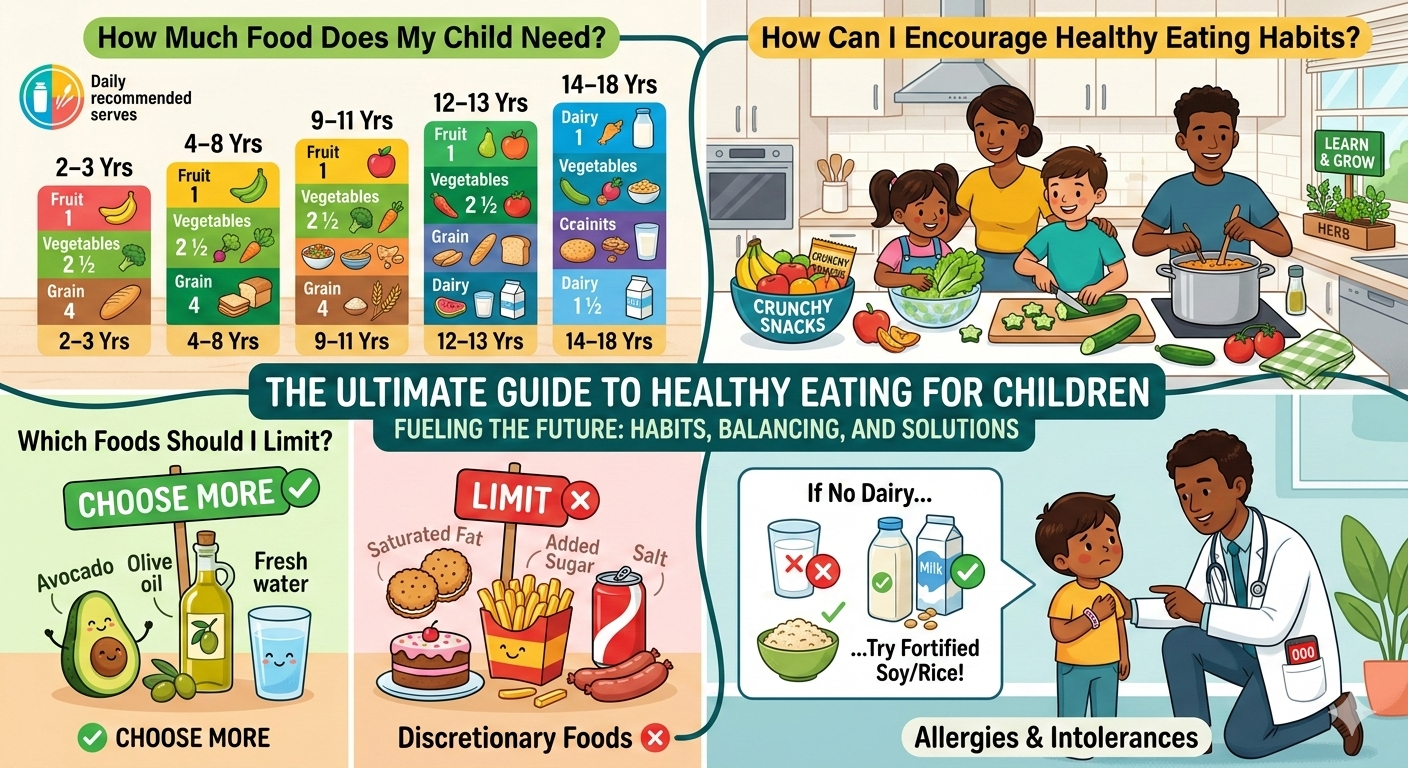
How Much Food Does My Child Actually Need?
As children grow, their energy requirements shift dramatically. While every child is an individual, the following daily serving guide provides a solid baseline for a balanced diet across different developmental stages.
Daily Recommended Servings by Age Group
| Age Group | Fruit | Vegetables | Grains | Lean Protein* | Dairy |
| 2–3 Years | 1 | 2 ½ | 4 | 1 | 1 ½ |
| 4–8 Years | 1 ½ | 4 ½ | 4 | 1 ½ | 1 ½ – 2 |
| 9–11 Years | 2 | 5 | 4 – 5 | 2 ½ | 2 ½ – 3 |
| 12–13 Years | 2 | 5 – 5 ½ | 5 – 6 | 2 ½ | 3 ½ |
| 14–18 Years | 2 | 5 – 5 ½ | 7 | 2 ½ | 3 ½ |
*Lean protein includes poultry, eggs, nuts, seeds, and legumes.

The “How-To” of Healthy Habits
Telling a child to “eat their greens” rarely works. Instead, the secret lies in exposure and environment. Habits formed at the family table are the ones that stick.
1. Make the Table a Tech-Free Zone
Sitting together as a family without screens (no phones, no TV) allows children to focus on their internal hunger and fullness cues. It also turns mealtimes into a social, bonding experience rather than a passive chore.
2. Get Creative with Presentation
If a child rejects a whole apple, try “apple donuts” (slices with the core removed and topped with nut butter) or use cookie cutters to turn a standard sandwich into a star or a dinosaur. Visual appeal matters!
3. Be a “Food Explorer”
Involve your children in the entire lifecycle of food:
- Shopping: Let them pick out one “mystery” vegetable to try each week.
- Gardening: Even a windowsill herb garden helps kids understand where food comes from.
- Prep: Small hands can wash lettuce, stir batter, or snap green beans. When they help cook it, they are much more likely to taste it.
4. Accessibility is Key
If the easiest thing to grab is a bag of chips, that’s what they’ll eat. Keep a washed, colorful bowl of seasonal fruit on the counter and pre-cut veggie sticks at eye level in the fridge.
Navigating “Discretionary” Foods
“Discretionary” is the nutritional term for foods that aren’t essential. These are often high in saturated fats, added sugars, and salt. While the occasional treat is part of a balanced life, making these daily staples can lead to long-term health issues like obesity or heart disease.
Foods to Limit:
- Sugary Snacks: Sweet biscuits, cakes, chocolate, and confectionery.
- Processed Meats: Sausages, deli meats, and nuggets.
- Fast Food: Store-bought burgers, pizza, and fried chips.
- Sugar-Sweetened Drinks: Soft drinks, cordials, and energy drinks.
Simple Swaps for a Healthier Pantry:
- Instead of Butter/Cream: Use avocado, nut butters, or olive oil.
- Instead of Soda: Offer water or plain sparkling water with a squeeze of fresh lime.
- Instead of Salt: Use herbs, spices, and lemon juice to flavor meals. Always check labels for “low-salt” or “no added salt” options.
Managing Allergies and Intolerances
Food should be nourishing, but for children with allergies, it can also be a source of anxiety. If your child is allergic to staples like dairy or wheat, maintaining a balanced diet requires more planning.
⚠️ CRITICAL SAFETY NOTE: > If you suspect your child is having a severe allergic reaction (anaphylaxis), call triple zero (000) immediately and request an ambulance. Do not wait to see if symptoms improve.
For managed intolerances (like lactose intolerance), work closely with your GP or a dietitian. They can help you find fortified alternatives to ensure your child doesn’t miss out on vital nutrients like Calcium or Vitamin B12.
Final Thoughts: Progress Over Perfection
Healthy eating isn’t about being “perfect” every day. It’s about the patterns you establish over months and years. By focusing on variety, involving your kids in the process, and keeping “discretionary” foods as occasional treats, you are giving your child the best possible start in life.
Would you like me to create a 7-day sample meal plan based on these daily serving recommendations?

