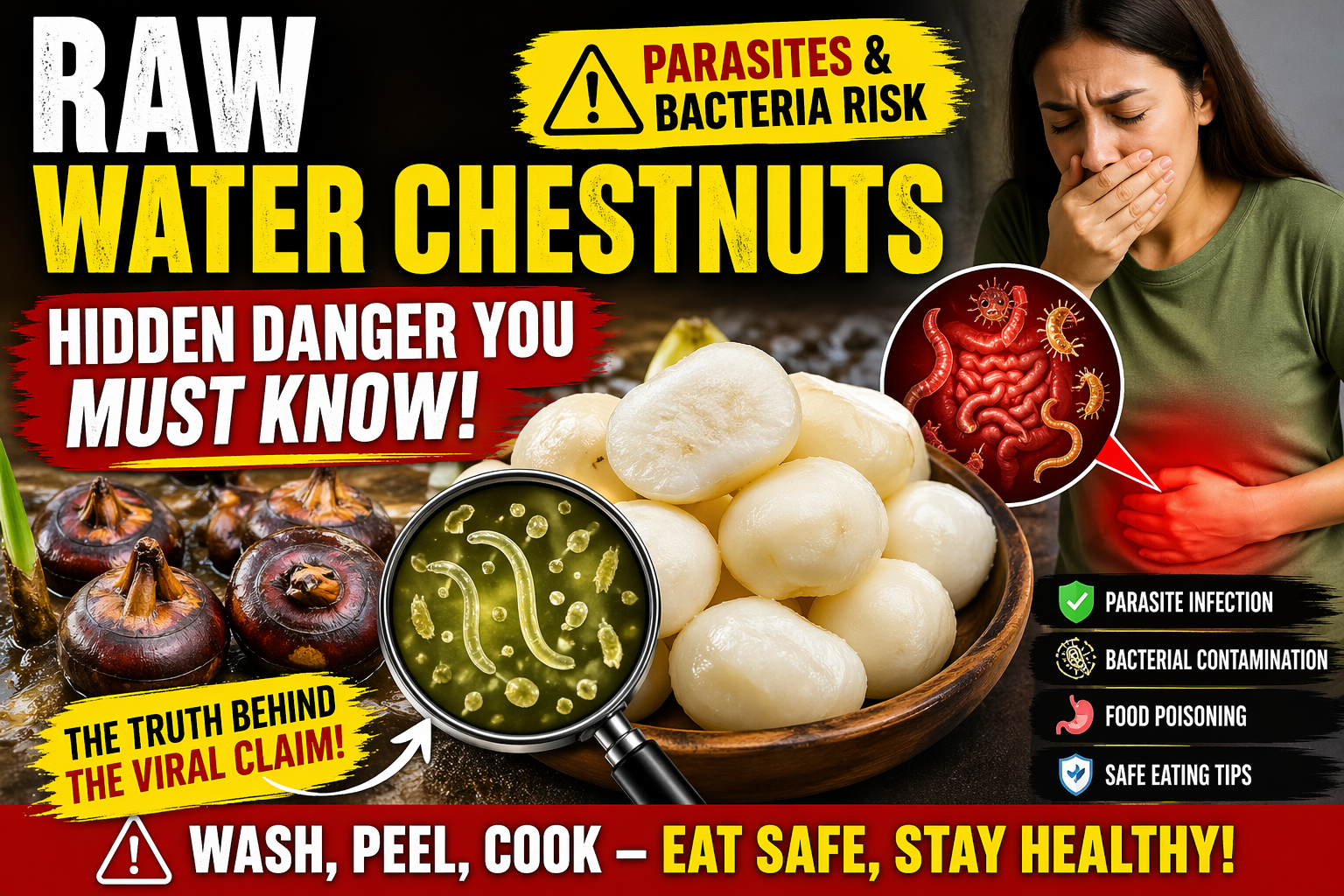
A viral image circulating online claims that “eating just one piece is equivalent to 100,000 parasites entering the body.” While this statement is exaggerated, it highlights a real health concern—consuming raw or improperly cleaned water chestnuts can expose you to harmful organisms.
Let’s break down the facts so you can stay safe and informed.
🌰 What Are Water Chestnuts?
Water chestnuts (scientifically known as Eleocharis dulcis) are aquatic vegetables commonly used in Asian cuisines. They are crunchy, slightly sweet, and often eaten:
- Raw
- Boiled
- Stir-fried
- In salads or desserts
They grow in muddy water environments, which is where the risk begins.
⚠️ Why Eating Raw Water Chestnuts Can Be Risky
1. Exposure to Parasites
Water chestnuts grow in stagnant or muddy water, which can contain harmful parasites like:
- Fasciolopsiasis (caused by intestinal flukes)
- Other water-borne parasites and larvae
These parasites can attach to the surface of the chestnut and enter the body if eaten raw.
2. Bacterial Contamination
Since they are harvested from wet, muddy environments, water chestnuts may carry bacteria such as:
- E. coli
- Salmonella
Without proper washing or cooking, these can lead to food poisoning.
3. Poor Hygiene During Handling
In many cases, water chestnuts are:
- Sold in open markets
- Stored in unclean water
- Handled without proper sanitation
This increases the risk of contamination.
🚫 Is the “100,000 Parasites” Claim True?
No, that viral claim is not scientifically accurate.
However:
- It is true that parasites can be present
- Infection risk depends on hygiene and preparation
- Even a small number of parasites can cause illness
👉 So while the number is exaggerated, the danger is real if precautions are ignored.
🤒 Possible Health Effects
Eating contaminated raw water chestnuts may lead to:
- Abdominal pain
- Diarrhea
- Nausea and vomiting
- Fever
- Intestinal infections
In rare cases, parasitic infections can become serious if untreated.
✅ How to Safely Eat Water Chestnuts
✔️ 1. Wash Thoroughly
- Rinse under running water
- Scrub the outer surface properly
✔️ 2. Peel Before Eating
- Remove the outer skin completely
- Avoid consuming unpeeled chestnuts
✔️ 3. Cook Before Consumption
- Boil or steam for a few minutes
- Cooking kills most parasites and bacteria
✔️ 4. Buy from Trusted Sources
Avoid chestnuts stored in dirty water
Choose clean, fresh produce
👨👩👧 Who Should Be Extra Careful?
Certain groups are more vulnerable:
- Children
- Pregnant women
- Elderly people
- Individuals with weak immunity
They should avoid eating raw water chestnuts completely.
🧠 Why People Still Eat It Without Thinking
📱 Social Media Influence
People see trending food videos and try them without checking safety.
🍽️ Traditional Habits
In some regions, eating raw chestnuts is common practice.
❌ Lack of Awareness
Many are unaware of the hygiene risks involved.
⚡ Key Takeaways
- Raw water chestnuts can carry parasites and bacteria
- Viral claims may exaggerate, but risks are real
- Proper washing, peeling, and cooking are essential
- Avoid eating them raw, especially from unknown sources