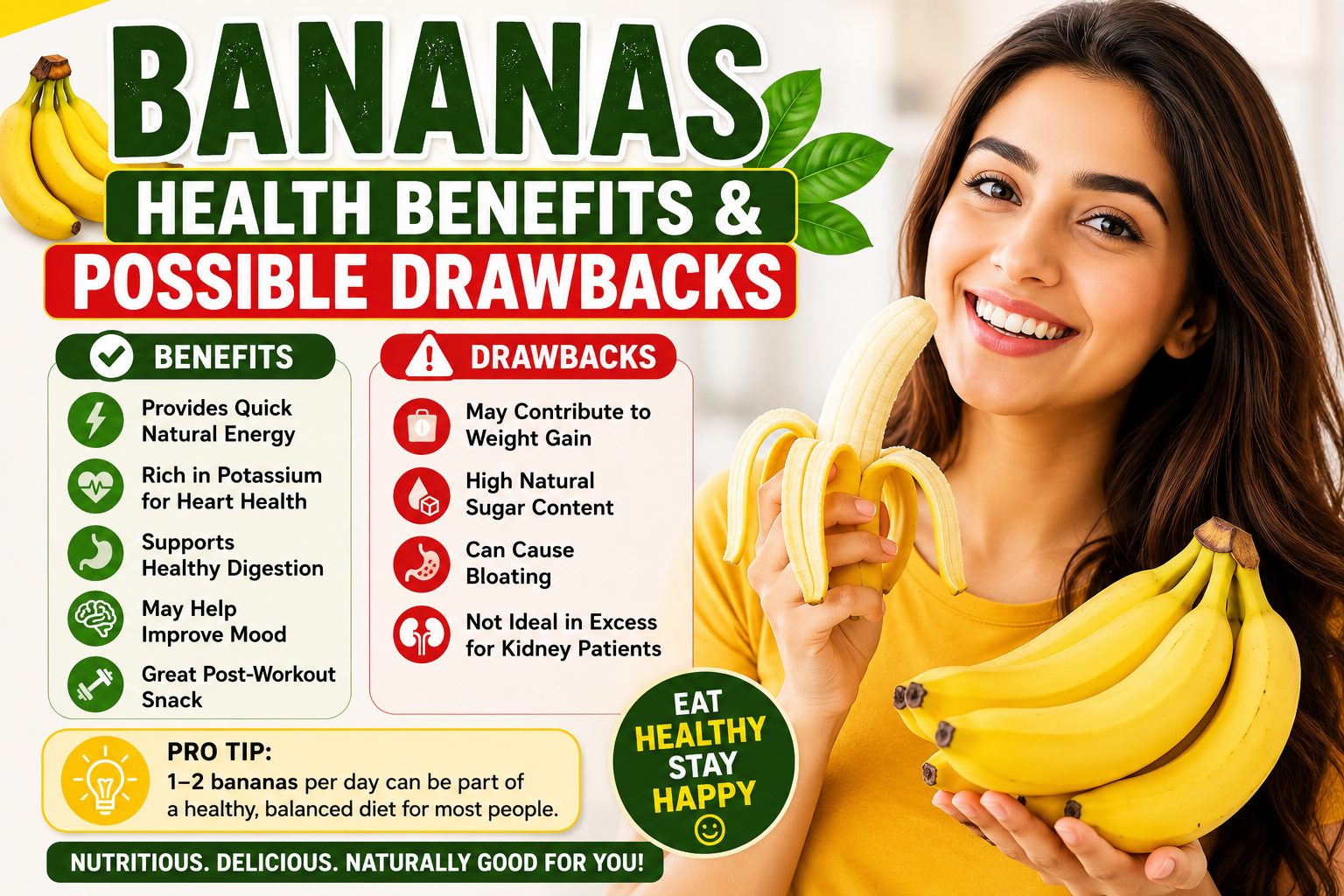
Bananas are among the most widely consumed fruits in the world. Affordable, convenient, naturally sweet, and packed with nutrients, bananas have become a staple food for millions of people. Whether enjoyed as a quick breakfast, a pre-workout snack, or blended into smoothies, bananas offer numerous health benefits that make them a favorite among nutritionists and fitness enthusiasts alike.
However, while bananas are highly nutritious, they are not without potential drawbacks. Like any food, eating them in moderation is important. Understanding both the benefits and limitations of bananas can help you make informed dietary choices and maximize their nutritional value.
In this comprehensive guide, we’ll explore everything you need to know about bananas, including their nutritional profile, health benefits, possible side effects, and the ideal amount to consume daily.

Nutritional Value of Bananas
A medium-sized banana (approximately 118 grams) typically contains:
- Calories: 105
- Carbohydrates: 27 grams
- Fiber: 3 grams
- Protein: 1.3 grams
- Fat: 0.3 grams
- Potassium: 422 mg
- Vitamin C: 10 mg
- Vitamin B6: 0.4 mg
- Magnesium: 32 mg
- Natural Sugars: 14 grams
Bananas are rich in vitamins, minerals, antioxidants, and dietary fiber. They provide a natural source of energy while being relatively low in fat and cholesterol-free.
Top Health Benefits of Bananas
1. Provides Quick Natural Energy
One of the biggest reasons athletes and fitness enthusiasts love bananas is their ability to provide immediate energy.
Bananas contain natural sugars such as:
- Glucose
- Fructose
- Sucrose
These sugars are quickly absorbed by the body and converted into usable energy. Combined with healthy carbohydrates, bananas become an ideal snack before physical activity.
Why it matters
Unlike processed energy bars or sugary snacks, bananas offer energy along with essential nutrients and fiber, making them a healthier choice.
Best times to eat for energy
- Before a workout
- During long-distance running
- As a mid-morning snack
- Before exams or mentally demanding tasks
2. Rich in Potassium for Heart Health
Bananas are famous for their potassium content.
Potassium is a vital mineral that helps:
- Regulate blood pressure
- Maintain fluid balance
- Support nerve function
- Improve muscle contractions
- Promote cardiovascular health
A single banana provides approximately 9–10% of your daily potassium needs.
Heart Health Benefits
Research suggests that potassium-rich diets may help lower blood pressure and reduce the risk of heart disease.
High sodium intake is often linked to hypertension. Potassium helps counteract sodium’s effects by relaxing blood vessel walls and supporting healthy circulation.
Regular banana consumption can be part of a heart-friendly diet when combined with other nutritious foods.
3. Supports Healthy Digestion
Bananas contain dietary fiber, which plays an important role in maintaining digestive health.
There are two main types of fiber found in bananas:
Soluble Fiber
Soluble fiber absorbs water and slows digestion, helping you feel full longer.
Insoluble Fiber
This type adds bulk to stool and promotes regular bowel movements.
Digestive Benefits
- Helps prevent constipation
- Supports gut health
- Encourages healthy bowel movements
- Improves digestion efficiency
Green bananas are particularly rich in resistant starch, a type of prebiotic fiber that feeds beneficial gut bacteria.
A healthy gut microbiome is associated with better digestion, improved immunity, and overall wellness.
4. May Help Improve Mood
Have you ever noticed feeling better after eating a banana?
Bananas contain tryptophan, an amino acid that the body converts into serotonin, often called the “feel-good” neurotransmitter.
Mood-Boosting Nutrients
Bananas provide:
- Vitamin B6
- Tryptophan
- Magnesium
Together, these nutrients help support:
- Mood regulation
- Emotional well-being
- Stress management
- Mental clarity
While bananas are not a cure for depression or anxiety, they may contribute positively to overall mental wellness when included in a balanced diet.
5. Excellent Post-Workout Recovery Food
After exercise, your body needs nutrients to replenish energy stores and support muscle recovery.
Bananas are ideal because they contain:
- Fast-digesting carbohydrates
- Potassium
- Magnesium
- Natural sugars
Benefits After Exercise
- Replenishes glycogen stores
- Reduces muscle cramps
- Supports electrolyte balance
- Provides quick recovery energy
Many athletes pair bananas with protein sources such as yogurt, milk, or peanut butter for a complete recovery snack.
6. Supports Weight Management
Although bananas contain calories and carbohydrates, they can actually support weight management when eaten appropriately.
How Bananas Help
- Increase feelings of fullness
- Reduce unnecessary snacking
- Provide natural sweetness
- Help control cravings
The fiber in bananas slows digestion and keeps hunger under control.
Replacing processed desserts with bananas can help reduce overall calorie intake while satisfying sweet cravings naturally.
7. Good for Kidney Function (in Healthy Individuals)
Potassium supports normal kidney function and fluid regulation in healthy people.
Some studies suggest that regular consumption of potassium-rich foods may contribute to long-term kidney health.
However, individuals with advanced kidney disease should consult their healthcare provider regarding potassium intake, as excess potassium can be harmful in certain conditions.
8. Supports Healthy Blood Sugar Management
Despite their natural sugar content, bananas have a relatively moderate glycemic index compared to many processed snacks.
The fiber helps slow sugar absorption into the bloodstream.
Tips for Better Blood Sugar Control
- Pair bananas with protein
- Combine with nuts or nut butter
- Eat alongside yogurt
- Avoid overripe bananas if blood sugar is a concern
People with diabetes can often enjoy bananas as part of a balanced meal plan, but portion control remains important.
9. Strengthens the Immune System
Bananas contain antioxidants and vitamin C, both of which support immune health.
Antioxidant Benefits
Antioxidants help:
- Combat oxidative stress
- Protect cells from damage
- Reduce inflammation
- Support healthy aging
While bananas are not the highest source of vitamin C, they contribute meaningfully to overall nutrient intake.
10. Convenient and Affordable Nutrition
One of the most overlooked benefits of bananas is convenience.
Bananas require:
- No preparation
- No refrigeration before ripening
- No packaging waste
- No cooking
They are portable, inexpensive, and available throughout the year, making healthy eating easier for people with busy lifestyles.
Possible Drawbacks of Eating Bananas
While bananas offer many benefits, excessive consumption may lead to certain issues.
1. May Contribute to Weight Gain When Overeaten
Bananas are nutritious, but calories still matter.
Eating multiple bananas daily in addition to your regular meals can increase overall calorie intake.
Important Perspective
One banana contains roughly 105 calories.
A single banana is unlikely to cause weight gain. Problems arise when large quantities are consumed without balancing overall calorie intake.
Moderation is key.
2. High Natural Sugar Content
Bananas naturally contain sugars.
While these sugars are healthier than refined sugar, consuming excessive amounts may impact blood sugar levels, particularly in:
- Individuals with diabetes
- People with insulin resistance
- Those following low-carbohydrate diets
Choosing slightly less ripe bananas may help reduce rapid blood sugar spikes.
3. Can Cause Bloating in Some People
Some individuals experience:
- Gas
- Bloating
- Mild digestive discomfort
This can happen because bananas contain fermentable carbohydrates and fiber.
People with sensitive digestive systems or irritable bowel syndrome (IBS) may notice symptoms after consuming large quantities.
Most people tolerate bananas well, but individual responses vary.
4. Excess Potassium Can Be Problematic for Certain Kidney Patients
Potassium is beneficial for most people.
However, individuals with:
- Chronic kidney disease
- Advanced kidney disorders
- Certain electrolyte imbalances
may need to limit potassium intake.
Since bananas are potassium-rich, excessive consumption may lead to elevated potassium levels in vulnerable individuals.
Always follow medical advice if you have kidney-related health concerns.
5. Rare Allergic Reactions
Although uncommon, some people may experience banana allergies.
Symptoms may include:
- Itching
- Swelling
- Hives
- Oral discomfort
People with latex allergies sometimes experience cross-reactivity with bananas, known as latex-fruit syndrome.
Medical evaluation is recommended if allergic symptoms occur.
Are Green Bananas Better Than Yellow Bananas?
Both offer benefits, but they differ nutritionally.
Green Bananas
- Higher resistant starch
- Lower sugar content
- Better for blood sugar management
- Supports gut health
Yellow Bananas
- Sweeter taste
- Easier digestion
- Higher antioxidant levels
- Quick energy source
The best choice depends on your health goals and personal preferences.
Best Ways to Include Bananas in Your Diet
Here are some healthy ways to enjoy bananas:
Breakfast Ideas
- Banana oatmeal
- Banana smoothie
- Whole-grain toast with banana slices
Snack Options
- Banana with peanut butter
- Banana and almonds
- Banana yogurt bowl
Post-Workout Snacks
- Banana protein shake
- Banana with Greek yogurt
- Banana and milk
Healthy Desserts
- Frozen banana bites
- Banana ice cream
- Banana pancakes
How Many Bananas Should You Eat Per Day?
For most healthy adults, consuming 1–2 bananas daily is considered reasonable and safe.
Factors that affect ideal intake include:
- Age
- Activity level
- Overall diet
- Medical conditions
- Calorie needs
Athletes may consume more due to higher energy demands, while individuals with kidney disease may require restrictions.
Balance and variety remain essential.
Frequently Asked Questions
Can I eat bananas every day?
Yes. Most healthy individuals can safely eat bananas daily as part of a balanced diet.
Are bananas good for weight loss?
They can support weight loss by increasing fullness and reducing unhealthy snacking when consumed in moderation.
Should diabetics avoid bananas?
Not necessarily. Portion control and pairing bananas with protein or healthy fats can help manage blood sugar response.
Is it okay to eat bananas at night?
Yes. Bananas contain nutrients that may support relaxation and are generally safe to eat at night.
Are bananas good before exercise?
Absolutely. Their carbohydrate content makes them an excellent pre-workout energy source.
Final Thoughts
Bananas are one of nature’s most convenient and nutritious foods. Packed with potassium, fiber, vitamins, and natural carbohydrates, they support heart health, digestion, energy production, muscle recovery, and overall well-being. They are affordable, versatile, and easy to include in daily meals.
At the same time, moderation is important. Excessive consumption may contribute to increased calorie intake, digestive discomfort, or complications for individuals with specific medical conditions such as kidney disease.
For most people, enjoying one or two bananas per day can be a healthy addition to a balanced diet. By combining bananas with a variety of fruits, vegetables, whole grains, lean proteins, and healthy fats, you can maximize their benefits while maintaining overall nutritional balance.
So, do you eat bananas every day? If yes, how do you like them best—plain, in smoothies, or as a post-workout snack? 🍌