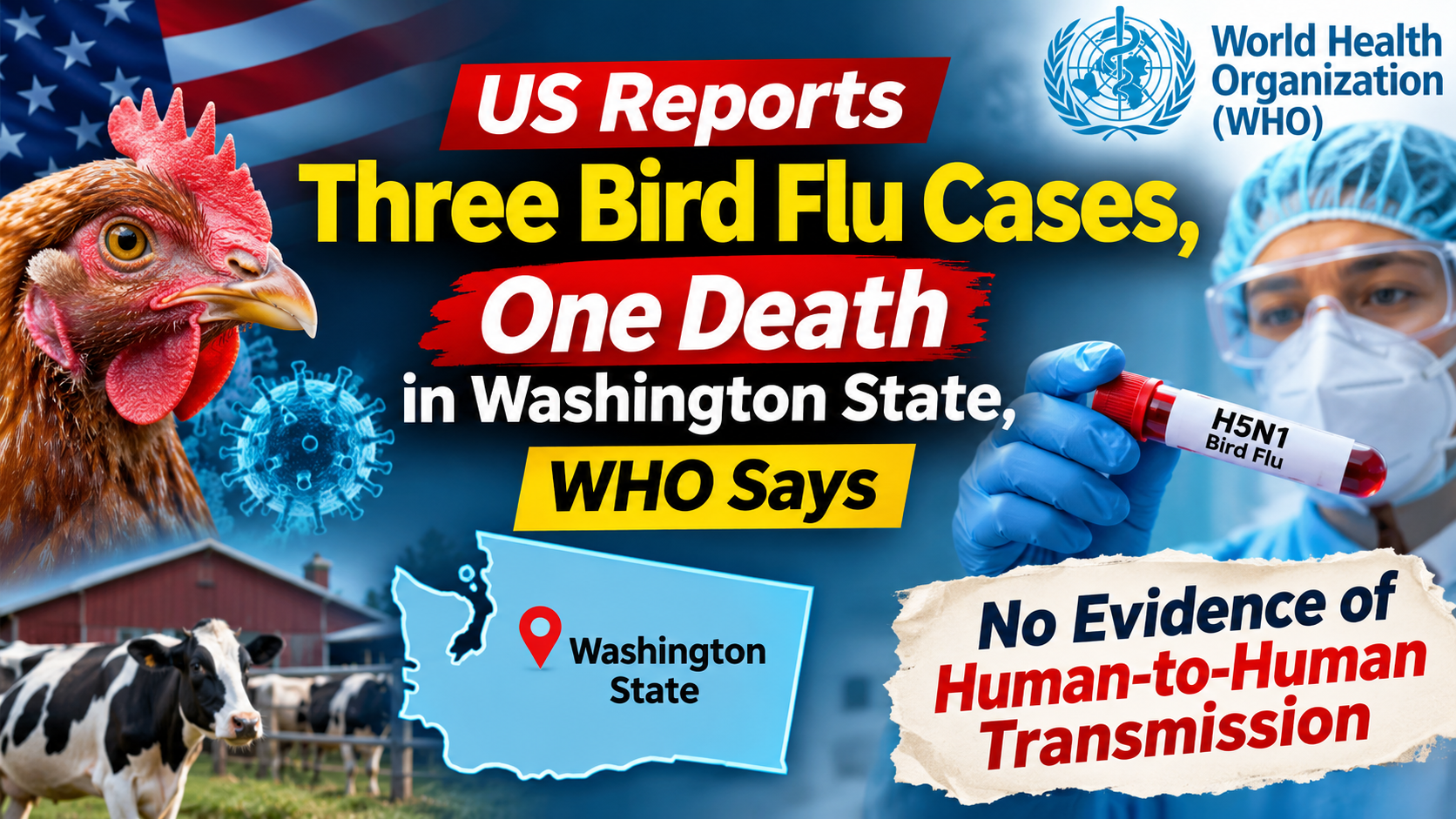
US Bird Flu Outbreak: Three Human Cases, One Death in Washington State, WHO Says
November 24, 2026
The United States has reported three confirmed human cases of bird flu in Washington state, including one fatality, according to the World Health Organization (WHO). The latest development has raised concerns about the spread of the H5N1 avian influenza virus among animals and humans.
All three infected individuals were dairy farm workers in Yakima County, where the virus had previously been detected in cattle. However, WHO confirmed that there is currently no evidence of human-to-human transmission associated with these cases.
Health authorities continue to monitor the situation while maintaining that the risk to the general population remains low. United States of America+1
US Bird Flu Outbreak 2026: What Happened in Washington State?
The latest bird flu cases in Washington involved three adults who had occupational exposure to dairy cattle.
The first patient experienced mild symptoms, including eye irritation and a runny nose, and recovered without hospitalization.
The second patient, who had underlying medical conditions, developed serious respiratory complications and died on November 1, 2026.
The third patient experienced conjunctivitis, commonly known as pink eye, and recovered without hospitalization.
Laboratory investigations confirmed that all three patients were infected with the H5N1 avian influenza virus. Genetic analysis also revealed similarities between the viruses detected in the patients and infected dairy cattle. CDC+1
What Is H5N1 Bird Flu?
Bird flu, scientifically known as avian influenza, is an infectious disease caused by influenza A viruses. Although these viruses primarily affect birds, certain strains can also infect mammals and humans.
H5N1 is a subtype of avian influenza that can cause serious illness in infected animals and, in some circumstances, humans.
Human infections are relatively uncommon. However, people who regularly handle infected birds, livestock or contaminated materials may face an increased risk of infection.
The spread of avian influenza among dairy cattle highlights the importance of monitoring animal diseases that have the potential to affect human health.
WHO Confirms No Evidence of Human-to-Human Transmission
One of the most important findings in the latest WHO bird flu update is the absence of evidence indicating transmission between people in the Washington cases.
Available findings suggest that the infections resulted from exposure to infected animals or contaminated farm environments.
WHO currently assesses the H5N1 infection risk as low for the general population and low to moderate for people with occupational exposure. This assessment could change if new scientific evidence becomes available. United States of America
Although the latest findings are reassuring, influenza viruses can evolve. Continued monitoring is therefore essential to identify changes that could affect transmission patterns.
Bird Flu Cases in the USA: Latest Statistics
According to the US Centers for Disease Control and Prevention (CDC), the country has recorded the following figures as of November 23, 2026:
| Category | Latest figures |
|---|---|
| Confirmed human H5 infections since February 2024 | 75 |
| Total associated deaths | 3 |
| Recent Washington cases | 3 |
| Recent Washington deaths | 1 |
| National public health risk | Low |
| Identified person-to-person spread in the US | None |
Most reported infections have been associated with animal exposure. CDC
Common Symptoms of Bird Flu in Humans
Bird flu symptoms can vary depending on the severity of infection and the individual’s health condition. Some people experience mild discomfort, while others may develop serious respiratory illness.
Common signs and symptoms include:
- Fever and chills
- Persistent cough
- Sore throat
- Runny or blocked nose
- Redness or irritation of the eyes
- Headache and muscle pain
- Fatigue and weakness
- Difficulty breathing
- Respiratory complications in severe cases
Anyone experiencing these symptoms after contact with potentially infected animals should seek medical advice and inform their healthcare provider about the exposure. Difficulty breathing requires urgent medical attention.
Early diagnosis and appropriate treatment may help reduce the risk of complications.
How Does Bird Flu Spread to Humans?
Avian influenza can spread from infected animals to humans through direct or indirect contact.
Potential sources of infection include handling infected poultry, touching sick animals, exposure to animal secretions and contact with contaminated equipment or surfaces.
The virus may enter the body through the eyes, nose or mouth. Farm workers and individuals involved in animal care may experience greater exposure than the general population.
Human infections can range from mild eye inflammation to severe respiratory disease. World Health Organization
Who Is at Higher Risk of Bird Flu Infection?
Although bird flu can potentially infect anyone exposed to the virus, certain occupational groups face greater risks.
These include dairy farm employees, poultry workers, veterinarians, livestock handlers and individuals responsible for handling sick or dead birds.
Older adults and people with certain underlying medical conditions may also face a higher risk of serious complications if infected.
Employers should provide appropriate protective equipment, workplace safety training and access to healthcare services for exposed workers.
Bird Flu Prevention: Essential Safety Tips
Taking appropriate precautions can help reduce the risk of H5N1 infection.
- Avoid direct contact with sick or dead birds and animals.
- Drink only pasteurized milk.
- Cook poultry, meat and eggs thoroughly.
- Wash your hands regularly with soap and water.
- Wear recommended masks, gloves and eye protection when handling potentially infected animals.
- Avoid touching your eyes, nose and mouth with unwashed hands.
- Report unusual animal illnesses to relevant authorities.
- Follow official WHO and CDC health advisories.
Proper food handling, personal hygiene and workplace protection remain important preventive measures.
Can H5N1 Bird Flu Cause Another Pandemic?

The possibility of a future influenza pandemic remains an important area of scientific research. However, the emergence of additional human bird flu cases does not automatically indicate that a pandemic is beginning.
A major concern would arise if the virus developed the ability to spread efficiently and continuously between humans.
Currently, sustained human-to-human transmission of H5N1 has not been established. Health organizations continue to monitor genetic changes, animal outbreaks and human infections to identify emerging threats.
Public awareness should be based on scientific evidence rather than fear or unverified social media reports.
Conclusion
The latest US bird flu outbreak in Washington state highlights the importance of disease surveillance, farm safety and public health preparedness.
While three confirmed human infections and one death represent a serious development, WHO and CDC assessments indicate that the current risk to the general population remains low.
People working closely with animals should take additional precautions, monitor potential symptoms and seek medical attention when necessary.
As investigations continue, staying informed through reliable health organizations, maintaining good hygiene and following recommended safety measures are essential steps in reducing the risk of avian influenza infection.
Frequently Asked Questions (FAQs)
1. Is bird flu spreading between humans in the USA?
No person-to-person transmission has been identified in the United States as of November 24, 2026.
2. Is H5N1 bird flu dangerous?
Yes. H5N1 can cause severe illness and potentially fatal complications, although some human infections are mild.
3. Is it safe to eat chicken and eggs during a bird flu outbreak?
Yes. Properly handled and thoroughly cooked poultry and eggs are generally safe to consume.
4. Can bird flu spread through raw milk?
Raw milk from infected cattle may contain the virus. Consumers should choose pasteurized milk and dairy products.
5. Should the general public worry about bird flu?
The current public health risk remains low, but people should follow official health recommendations.
Official information sources: