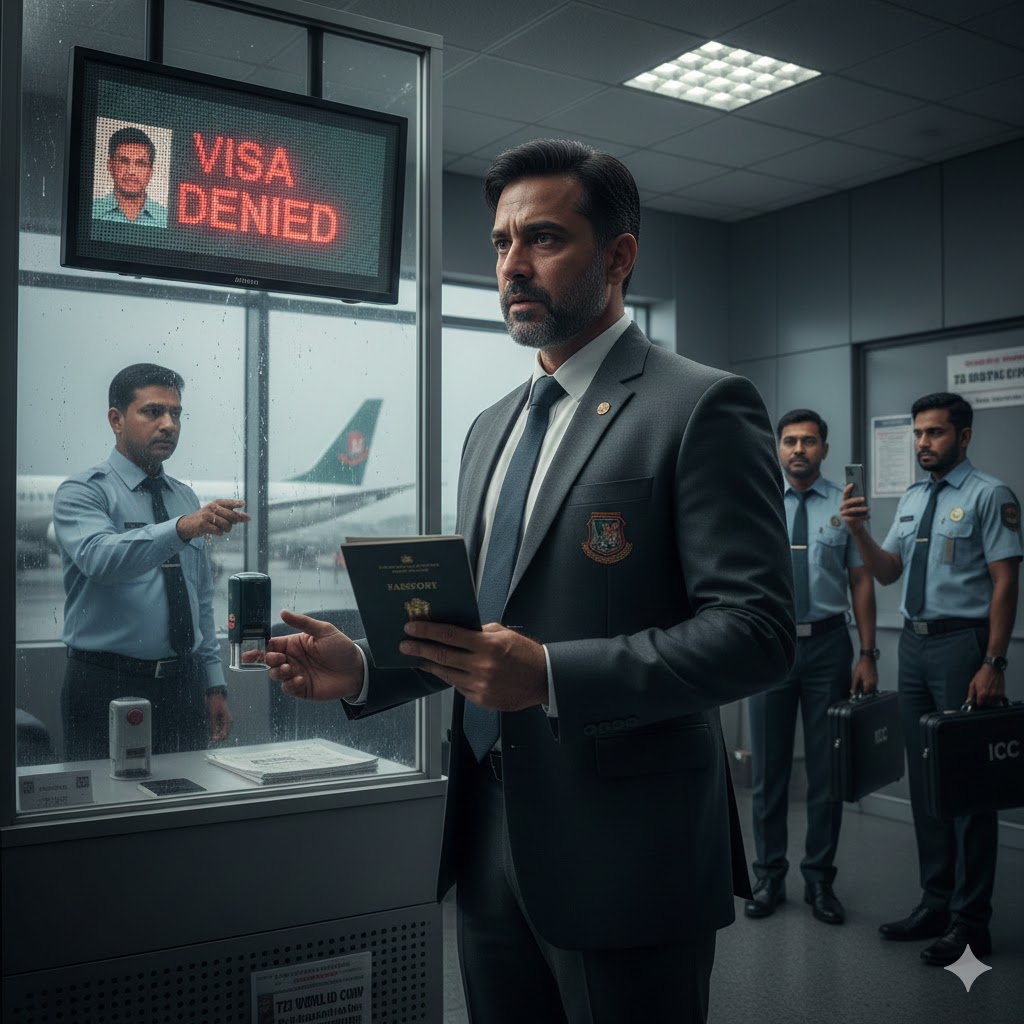
The International Cricket Council (ICC) has reportedly faced an unexpected diplomatic setback after one of its officials was denied a visa for a planned visit to Bangladesh. The incident comes amid ongoing tensions surrounding the ICC Men’s T20 World Cup, adding another layer of controversy to an already sensitive situation.
What Happened?
According to reports, the ICC had planned to send a delegation to Bangladesh as part of its official engagements. However, the delegation was forced to proceed with only half its original strength after an ICC official of Indian nationality was reportedly not issued a visa on time by Bangladeshi authorities.
As a result, the affected official could not travel, leading to a reduced ICC presence during the visit. The delay and subsequent denial have raised questions about coordination, diplomacy, and the broader implications for international cricket administration.
Background: T20 World Cup Tensions
The visa issue is believed to be linked to the ongoing disputes and disagreements surrounding the T20 World Cup. While no official statement has directly connected the visa denial to political or cricketing tensions, the timing has fueled speculation.

The ICC has been under pressure from multiple cricket boards regarding scheduling, venues, security concerns, and administrative decisions related to global tournaments. Bangladesh, being a key cricketing nation in the subcontinent, plays an important role in ICC affairs.
Impact on ICC–Bangladesh Relations
Although the visit still took place, the absence of a key official reportedly limited the scope of discussions. Such incidents, even if administrative in nature, can affect working relationships between international bodies and host nations.
At this stage:
- The ICC has not released an official statement confirming the visa denial.
- Bangladesh authorities have also not publicly commented on the issue.
- It remains unclear whether the delay was procedural or intentional.
Why This Matters
Visa-related issues involving international sports officials are rare and often attract global attention. For an organization like the ICC, which oversees cricket across nations with complex political relationships, smooth coordination is crucial.
This incident highlights:
- The growing sensitivity around international cricket governance
- How geopolitics can indirectly impact sports administration
- The importance of timely diplomatic and logistical coordination
What Happens Next?
Sources suggest the ICC may seek clarification through diplomatic or official channels to avoid similar issues in the future. With several major ICC events lined up, including global tournaments and bilateral series, maintaining strong relations with member nations remains a priority.
For now, the incident serves as a reminder that cricket, despite being a sport, does not operate in isolation from international relations.
Conclusion
The reported denial of a visa to an ICC official for a Bangladesh visit has added an unexpected twist to the ongoing T20 World Cup narrative. While the full facts are yet to emerge, the situation underscores how administrative and diplomatic challenges can influence the global game.
As cricket fans and stakeholders await official clarification, all eyes will be on how the ICC and Bangladesh Cricket Board handle the situation moving forward.